
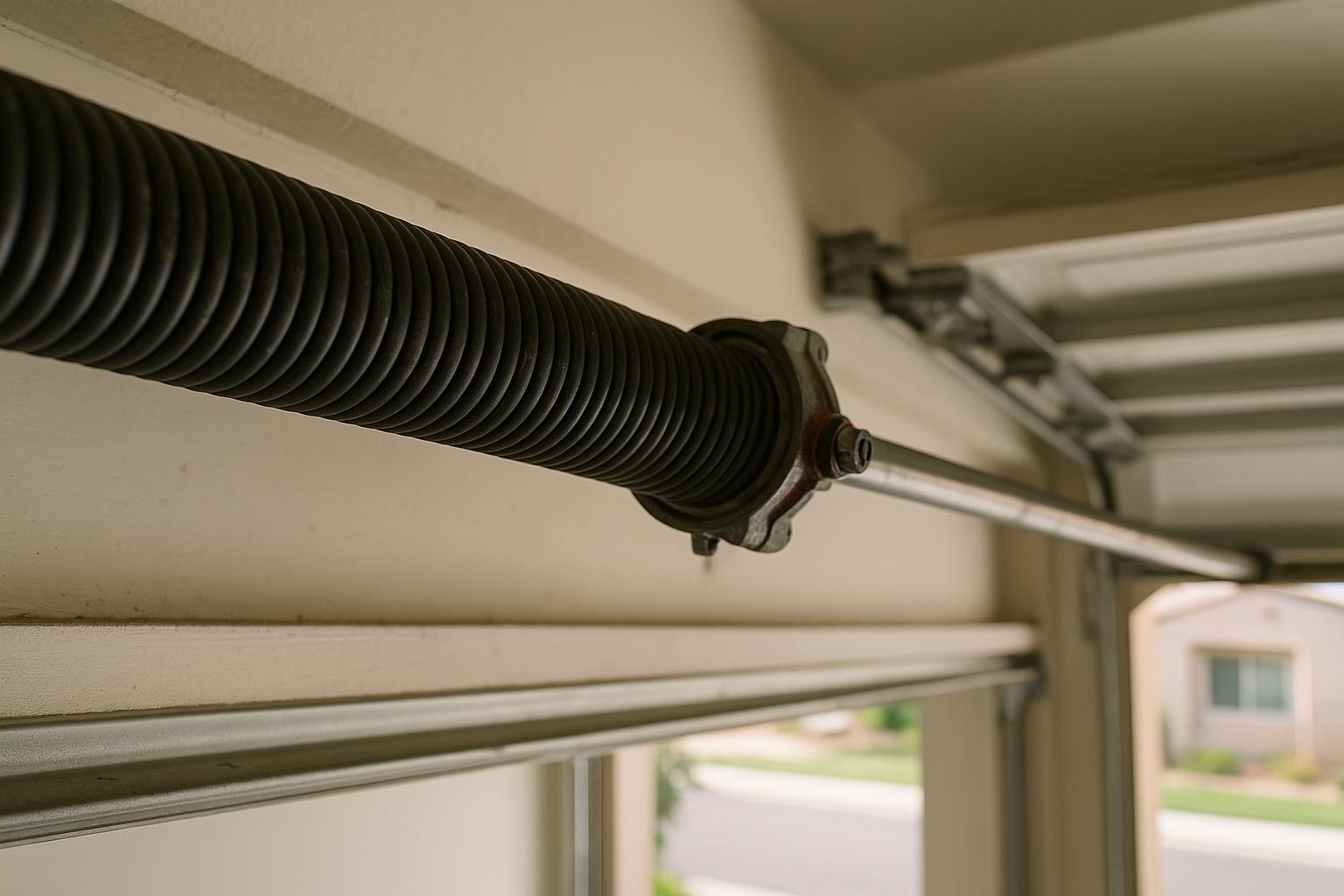
Your Garage Door Springs Are Doing More Work Than You Think
Most homeowners in Menifee don't think about their garage door springs — until something goes wrong. But here's the truth: those tightly wound springs are the real workhorses of your entire garage door system. They bear the full weight of the door every single time it opens and closes, which for the average household means about 1,500 cycles per year.
So how often should you replace them? And how do you know when it's time? Let's break it all down so you can stay ahead of a potentially dangerous and inconvenient failure.
How Long Do Garage Door Springs Typically Last?
The lifespan of a garage door spring is measured in cycles — one cycle equals one full open and one full close. Most standard garage door springs are rated for approximately 10,000 cycles. If your household opens and closes the garage door about four times a day, that works out to roughly 7 to 9 years of use before the springs reach the end of their expected life.
However, several factors can shorten or extend that lifespan:
- Frequency of use: Families that use the garage as their primary entrance may cycle the door 6 to 8 times a day, cutting spring life significantly.
- Climate and temperature swings: Here in Menifee and the surrounding Inland Empire, we experience hot summers and cooler winters. These temperature fluctuations cause the metal in springs to expand and contract, which can accelerate wear over time.
- Maintenance habits: Springs that are regularly lubricated and inspected tend to last longer than those that are neglected.
- Spring quality: Not all springs are created equal. Higher-cycle springs (rated for 20,000 or even 25,000 cycles) are available and can last significantly longer, though they cost a bit more upfront.
Torsion Springs vs. Extension Springs: What's the Difference?
Before we go further, it helps to know which type of spring your garage door uses. There are two main types:
Torsion Springs
These are mounted horizontally above the garage door opening. They use torque — a twisting force — to lift the door. Torsion springs are the more common and generally preferred option for modern garage doors because they provide smoother, more balanced operation and tend to last longer.
Extension Springs
These run along the horizontal tracks on either side of the door. They stretch and contract to assist with lifting. Extension springs are more common on older or lighter doors. They're typically less expensive but can wear out faster and pose a greater safety risk if they snap without a safety cable in place.
Regardless of which type you have, both will eventually wear out and need replacement.
Warning Signs Your Garage Door Springs Are Failing
Springs rarely fail without giving some warning signs first. Here's what to watch for:
- The door feels heavier than usual: If your garage door seems harder to lift manually or your opener is straining, the springs may be losing tension.
- The door doesn't stay open: A properly functioning spring system should hold the door in place when you open it halfway. If it slides down, the springs are weakening.
- Visible gaps in the spring coils: For torsion springs, a visible gap or separation in the coils is a clear sign the spring has snapped or is about to.
- The door opens unevenly: If one side lifts faster than the other, one of your springs may be more worn than its counterpart.
- A loud bang from the garage: Many Menifee homeowners first discover a broken spring when they hear a loud bang — almost like a gunshot — coming from the garage. That's the sound of a spring snapping under tension.
- The opener struggles or refuses to open the door: Modern openers have safety features that prevent them from operating when the load is too heavy, which can happen when a spring breaks.
Can You Replace Garage Door Springs Yourself?
We'll be straightforward with you: garage door spring replacement is one of the most dangerous DIY home repairs you can attempt. Torsion springs are under an enormous amount of tension. A spring that's improperly handled can cause serious injury or even death. Extension springs, while slightly less dangerous, can still cause harm if they snap or are installed incorrectly.
Professional technicians have the proper tools, training, and experience to replace springs safely and efficiently. They also know how to properly balance the door after installation, which is critical for the longevity of both the new springs and your garage door opener.
If you're in Menifee or any of the nearby communities like Sun City, Murrieta, or Wildomar, having a local professional handle the job means faster response times and someone who understands the specific needs of homes in our area.
Should You Replace Both Springs at the Same Time?
If your garage door has two springs — which most doors with torsion spring systems do — we strongly recommend replacing both at the same time, even if only one has broken. Here's why:
- Both springs were installed at the same time and have experienced the same number of cycles. If one has failed, the other is likely close behind.
- Replacing both at once saves you from paying for a second service call in a few weeks or months.
- New springs on both sides ensure balanced operation, which reduces strain on your opener and tracks.
How to Extend the Life of Your Garage Door Springs
While springs will always eventually wear out, there are steps you can take to get the most life out of them:
- Lubricate your springs regularly: Apply a silicone-based or white lithium grease lubricant to your springs every few months. This reduces friction and helps prevent rust, which is especially important given the dry, dusty conditions we often see in the Menifee area.
- Schedule annual maintenance: A professional tune-up once a year allows a technician to inspect your springs, check the balance of the door, and catch small issues before they become big problems.
- Upgrade to high-cycle springs: If you're replacing springs, ask about high-cycle options. Springs rated for 20,000 or 25,000 cycles can last twice as long as standard springs.
- Don't ignore small problems: If your door starts acting differently — moving slower, making new sounds, or feeling off-balance — address it promptly rather than waiting for a full failure.
When It's Time, Call a Local Pro You Can Trust
Garage door springs are one of those things that are easy to forget about until they fail — and when they do, it usually happens at the worst possible time. Knowing the warning signs and staying on top of basic maintenance can help you avoid getting stuck with a door that won't open on a busy Monday morning.
If your springs are showing signs of wear or you're overdue for a maintenance check, Menifee Garage Door is here to help. We serve homeowners throughout Menifee, Temecula, Lake Elsinore, and the surrounding communities with honest pricing and reliable service. Whether you need a quick spring replacement or a full garage door tune-up, we'll get it done right the first time.