
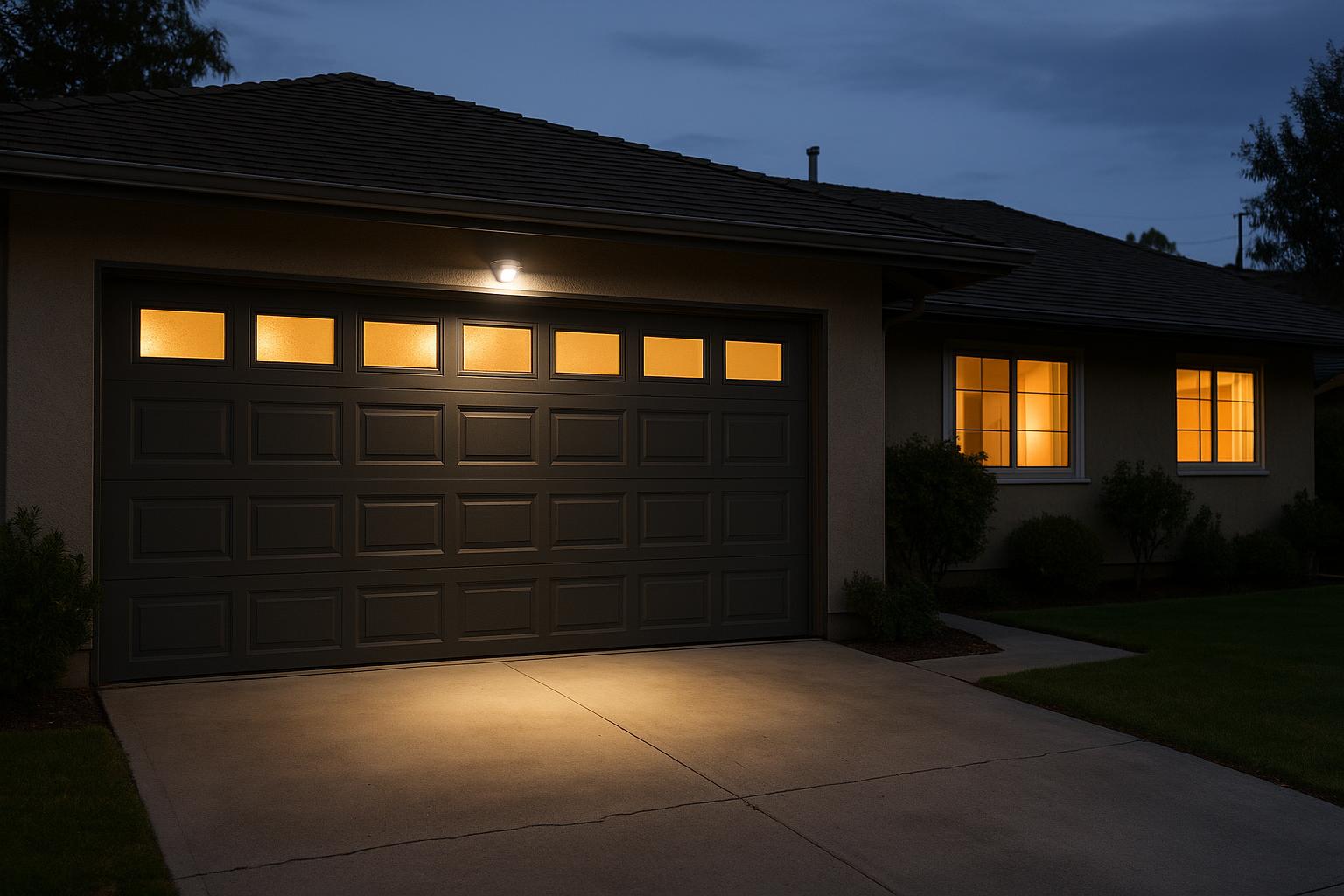
Your Garage Door Might Be Your Home's Biggest Vulnerability
Most homeowners in Menifee think about locks on their front doors, security cameras, and motion-sensor lights when it comes to home safety. But there's one entry point that often gets overlooked — the garage door. It's the largest moving part of your home, and for many families, it's used more frequently than the front door itself.
If your garage door is outdated, poorly maintained, or lacking modern security features, it could be an open invitation for intruders. The good news? Most garage door security issues are easy to identify and fix once you know what to look for.
Why Burglars Target Garage Doors
According to the FBI's crime statistics, a significant percentage of home break-ins happen through the garage. There are a few reasons for this:
- Older garage doors are easier to force open — worn-out locks, flimsy panels, and outdated openers make them vulnerable.
- Garage doors often connect directly to the home — once inside the garage, an intruder may have easy access to your living space through an unlocked interior door.
- They provide cover — once a garage door is closed behind them, a burglar can work undetected inside your garage.
- Remote signal hacking — older garage door openers use fixed codes that can be intercepted with inexpensive devices.
Menifee is a growing community with a mix of newer developments and established neighborhoods. Whether you live near the shops on Newport Road or in a quiet Sun City community, understanding these risks is the first step toward better security.
7 Signs Your Garage Door Is a Security Risk
Take a few minutes to inspect your garage door with these common vulnerabilities in mind:
1. Your Opener Uses a Fixed Code
Garage door openers manufactured before the mid-2000s often use a fixed radio frequency code. These can be captured and replicated using a code grabber — a device that's surprisingly easy to obtain. If your opener is more than 15 to 20 years old, there's a good chance it falls into this category.
2. The Emergency Release Is Accessible from Outside
Most garage doors have an emergency release cord that allows you to open the door manually during a power outage. On some doors, a simple coat hanger threaded through the top of the door can reach this cord and disengage the opener, allowing the door to be lifted by hand. This is one of the most well-known garage break-in techniques.
3. Your Door Panels Are Weak or Damaged
Thin, dented, or cracked panels aren't just an eyesore — they're structurally compromised. A determined intruder can kick through a weakened panel, especially on older single-layer steel or aluminum doors.
4. There's No Auto-Lock Feature
Some garage door openers don't automatically lock the door when it closes. Without a deadbolt or automatic locking mechanism, the door can potentially be pried open from the bottom with a crowbar.
5. You Leave the Remote in Your Car
A garage door remote clipped to your visor is convenient, but if your car is broken into — or if you leave it unlocked in the driveway — a thief now has easy access to your garage and potentially your entire home.
6. The Door Doesn't Close Completely
Gaps at the bottom or sides of your garage door are more than just a weather issue. Even a small gap can allow someone to use a tool to manipulate the emergency release or see what's stored inside.
7. There's No Lighting or Visibility
A dark garage entrance with no motion-activated lighting is an easy target. Burglars prefer to work in the dark, and a poorly lit garage area gives them the cover they need.
How to Secure Your Garage Door
Once you've identified potential weak points, here are practical steps you can take to improve your garage door security:
Upgrade to a Rolling Code Opener
Modern garage door openers use rolling code technology, which generates a new code every time the remote is used. This makes it virtually impossible for someone to intercept and duplicate your signal. If your opener is outdated, upgrading is one of the smartest security investments you can make.
Install a Garage Door Lock or Deadbolt
Adding a manual slide lock or an automatic deadbolt system gives your door an extra layer of protection. Some newer openers come with built-in automatic locking, which engages every time the door closes.
Secure the Emergency Release
You can purchase an emergency release shield — a simple plastic guard that prevents someone from fishing a tool through the top of the door to pull the cord. It's an inexpensive fix that eliminates one of the most common break-in methods. A garage door technician can install one quickly during a routine service call.
Use a Smart Garage Door Controller
Smart garage door controllers connect to your home Wi-Fi and let you monitor and control your garage door from your phone. You'll receive alerts if the door is opened unexpectedly, and you can close it remotely if you forgot to shut it when you left. For Menifee homeowners who commute to Riverside, San Diego, or other parts of the Inland Empire, this kind of peace of mind is invaluable.
Reinforce or Replace Weak Panels
If your door panels are dented, cracked, or made of thin single-layer material, consider reinforcing them with a strut kit or replacing the door altogether. Modern insulated steel doors are significantly stronger and more resistant to forced entry.
Add Motion-Sensor Lighting
Installing a bright motion-activated light above or near your garage door is a simple deterrent. Burglars don't want to be seen, and a sudden flood of light is often enough to send them elsewhere.
Lock the Interior Door
This one seems obvious, but it's frequently overlooked. The door that connects your garage to your home should always be locked with a solid deadbolt — just like your front door. If someone does get into your garage, this is your last line of defense.
Don't Forget Regular Maintenance
Security and maintenance go hand in hand. A garage door that's properly maintained is a garage door that functions reliably — closing completely, locking securely, and responding correctly to your opener. Worn springs, misaligned tracks, and fraying cables can all prevent your door from closing properly, leaving your home exposed.
A professional tune-up once a year can catch these issues before they become security problems. During a maintenance visit, a technician can also assess your door's security features and recommend upgrades specific to your setup.
Take Action Before There's a Problem
Home security isn't something most people think about until something goes wrong. But when it comes to your garage door, a little proactive attention can make a big difference. Whether you need a new opener with rolling code technology, a reinforced door, or just a thorough inspection, addressing these vulnerabilities now is far easier — and cheaper — than dealing with a break-in later.
If you're a homeowner in Menifee or the surrounding communities of Murrieta, Temecula, Wildomar, or Lake Elsinore and you're not sure where your garage door stands security-wise, we're happy to take a look. At Menifee Garage Door, we'll give you an honest assessment and help you make your garage — and your home — safer.