
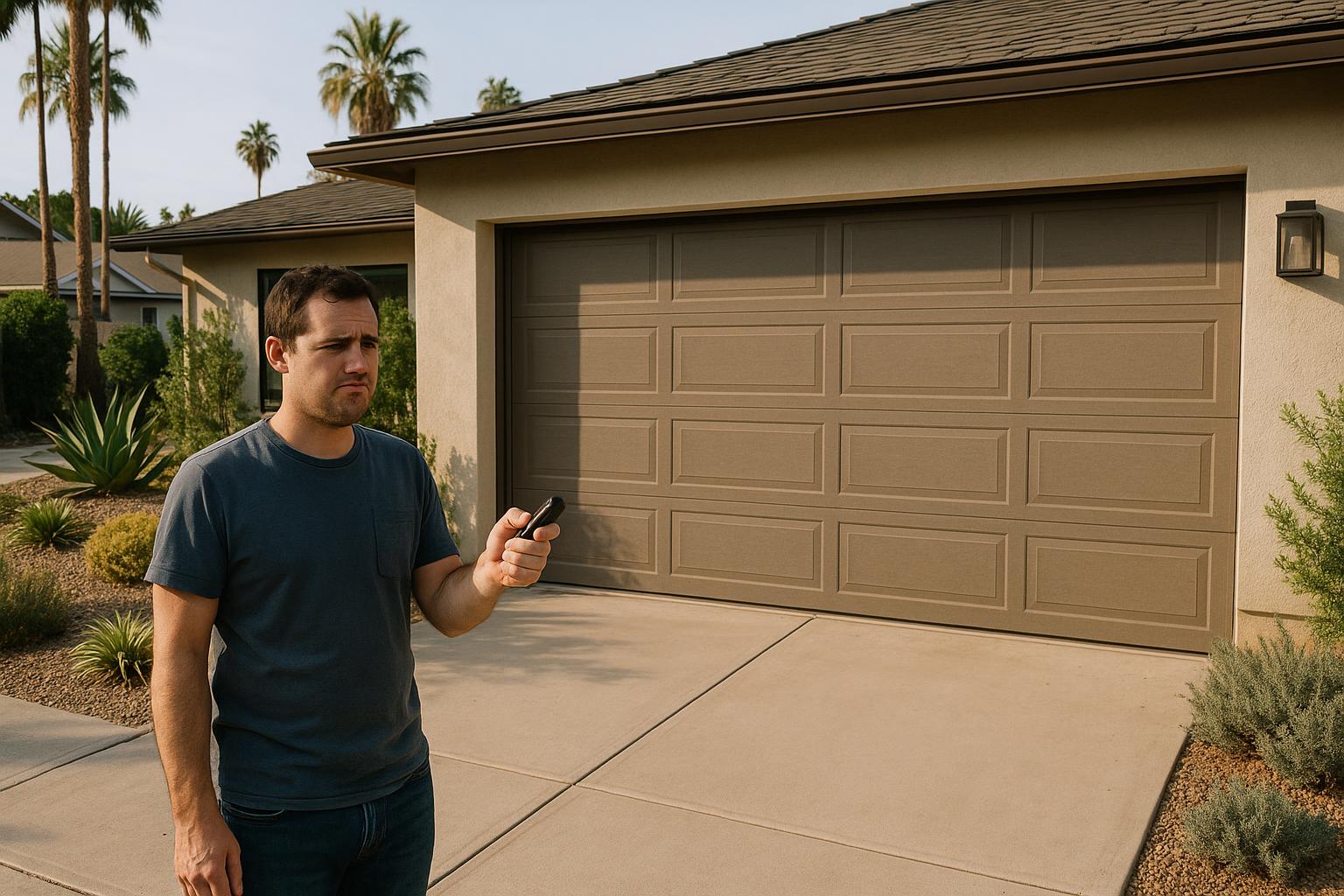
When Your Garage Door Stops Working, Don't Panic
You're running late for work, you press the button on your remote, and nothing happens. Or maybe you pull into the driveway after a long day and your garage door refuses to close. It's one of those problems that feels urgent because, well, it is — your garage door is often the largest entry point to your home, and when it stops working, your security, convenience, and daily routine all take a hit.
Before you start worrying about a costly repair, take a breath. Many garage door issues have straightforward causes, and some you can even troubleshoot yourself. For Menifee homeowners dealing with a stubborn garage door, here's a step-by-step guide to figuring out what's going on and what to do next.
Check the Obvious Things First
It might sound too simple, but the most common reasons a garage door won't respond are often the easiest to overlook.
- Dead remote batteries: If your wall-mounted button works but your remote doesn't, swap out the batteries before assuming something bigger is wrong.
- The door is locked: Some garage doors have a manual lock feature. If someone accidentally engaged it, the opener will strain against the lock and the door won't move.
- Power outage or unplugged opener: Check that the opener unit is plugged in and that your outlet has power. A tripped breaker or a cord that got bumped loose can shut everything down.
These quick checks take less than a minute and solve the problem more often than you'd think.
Inspect the Safety Sensors
If your garage door opens but won't close — or starts to close and then reverses — the photo-eye safety sensors are the most likely culprit. These small sensors sit near the bottom of the door tracks on either side and send an invisible beam across the opening. If anything interrupts that beam, the door won't close as a safety precaution.
Here's what to look for:
- Obstructions: Move any boxes, trash cans, bikes, or debris that might be blocking the sensor's line of sight.
- Dirty lenses: Dust, cobwebs, and dirt build up on the sensor lenses over time, especially here in Menifee where dry, dusty conditions are common during the warmer months. Wipe them gently with a clean cloth.
- Misalignment: If one sensor has been bumped or shifted, the beam won't connect. Most sensors have a small LED light — if it's blinking instead of steady, the sensor is likely out of alignment. You can sometimes adjust it carefully by hand, but if you can't get the lights to stay solid, it's best to call a technician.
Look at the Tracks and Rollers
Your garage door rides along metal tracks on both sides. If those tracks are bent, dented, or clogged with debris, the door can get stuck partway or refuse to move at all.
Do a visual inspection:
- Look for visible bends or gaps between the track and the rollers.
- Check for small rocks, leaves, or buildup in the track channel.
- Listen for grinding or scraping sounds when the door tries to move — that usually means something is physically obstructing the path.
You can clean out minor debris yourself, but never try to bend or hammer a track back into shape on your own. The tracks are under tension from the door's weight, and improper adjustments can make the problem worse or create a safety hazard.
Consider the Springs and Cables
If you hear the opener motor running but the door barely lifts — or doesn't lift at all — there's a good chance a spring has broken. Garage door springs carry the vast majority of the door's weight, and when one snaps, the opener simply can't handle the load alone.
Signs of a broken spring include:
- A loud bang from the garage (often described as sounding like a gunshot)
- A visible gap in the torsion spring above the door
- The door feels extremely heavy when you try to lift it manually
- Loose or hanging cables along the sides of the door
This is not a DIY repair. Garage door springs are under extreme tension and can cause serious injury if handled incorrectly. If you suspect a broken spring, don't try to operate the door — call a professional right away.
Test the Opener Itself
If you've ruled out the sensors, tracks, and springs, the problem might be with the garage door opener unit. Openers are mechanical devices with motors, gears, and circuit boards that wear out over time.
A few signs your opener may be failing:
- The motor hums but the door doesn't move (often a stripped gear)
- The remote and wall button both fail to trigger any response
- The opener light blinks a specific number of times (check your owner's manual — many brands use blink codes to indicate specific errors)
If your opener is more than 15 years old and giving you repeated trouble, replacement is often more cost-effective than continued repairs. Modern openers are quieter, more energy-efficient, and come with improved safety and smart-home features that many Menifee homeowners appreciate.
When to Use the Emergency Release
Every garage door opener has a red emergency release cord hanging from the track rail. Pulling this cord disconnects the door from the opener so you can operate it manually. This is useful when:
- You need to get your car out during a power outage
- The opener has failed and you need to secure the door until a repair can be made
To use it safely, make sure the door is in the closed position before pulling the release. If the door is open and a spring is broken, releasing it from the opener could cause it to come crashing down.
Know When to Call a Professional
Some garage door issues are perfectly fine to troubleshoot on your own — dead batteries, dirty sensors, minor debris in the tracks. But anything involving springs, cables, track realignment, or opener internals should be left to an experienced technician.
Here's a good rule of thumb: if the fix requires tools beyond a cloth and a screwdriver, or if anything looks bent, broken, or under tension, pick up the phone instead of a wrench.
At Menifee Garage Door, we handle these calls every day. Whether it's a sensor that won't cooperate or a spring that snapped at the worst possible time, we show up quickly, diagnose the issue honestly, and get your door working again without unnecessary upselling.
Preventing Future Problems
The best way to avoid getting stuck with a garage door that won't cooperate is regular maintenance. A simple annual tune-up — lubricating moving parts, tightening hardware, testing the balance and safety features — can catch small issues before they turn into emergency repairs.
Living in the Inland Empire means your garage door deals with temperature swings, dust, and sun exposure year-round. A little preventive care goes a long way toward keeping everything running smoothly.
If your garage door is giving you trouble or it's been a while since your last maintenance check, give us a call. We're local, we're straightforward, and we're here to help Menifee homeowners keep their garage doors working the way they should.