
That Grinding, Squealing, or Banging Isn't Normal
If your garage door has started sounding like a freight train every time you open or close it, you're not alone. Noisy garage doors are one of the most common complaints we hear from homeowners in Menifee, and for good reason — when your bedroom or living room shares a wall with the garage, every rattle and grind becomes impossible to ignore.
The good news is that most garage door noises have identifiable causes, and many of them are fixable without replacing the entire door. The bad news? Ignoring the noise usually means a bigger repair bill down the road. Let's walk through the most common culprits and what you can do about each one.
1. Worn or Dry Rollers
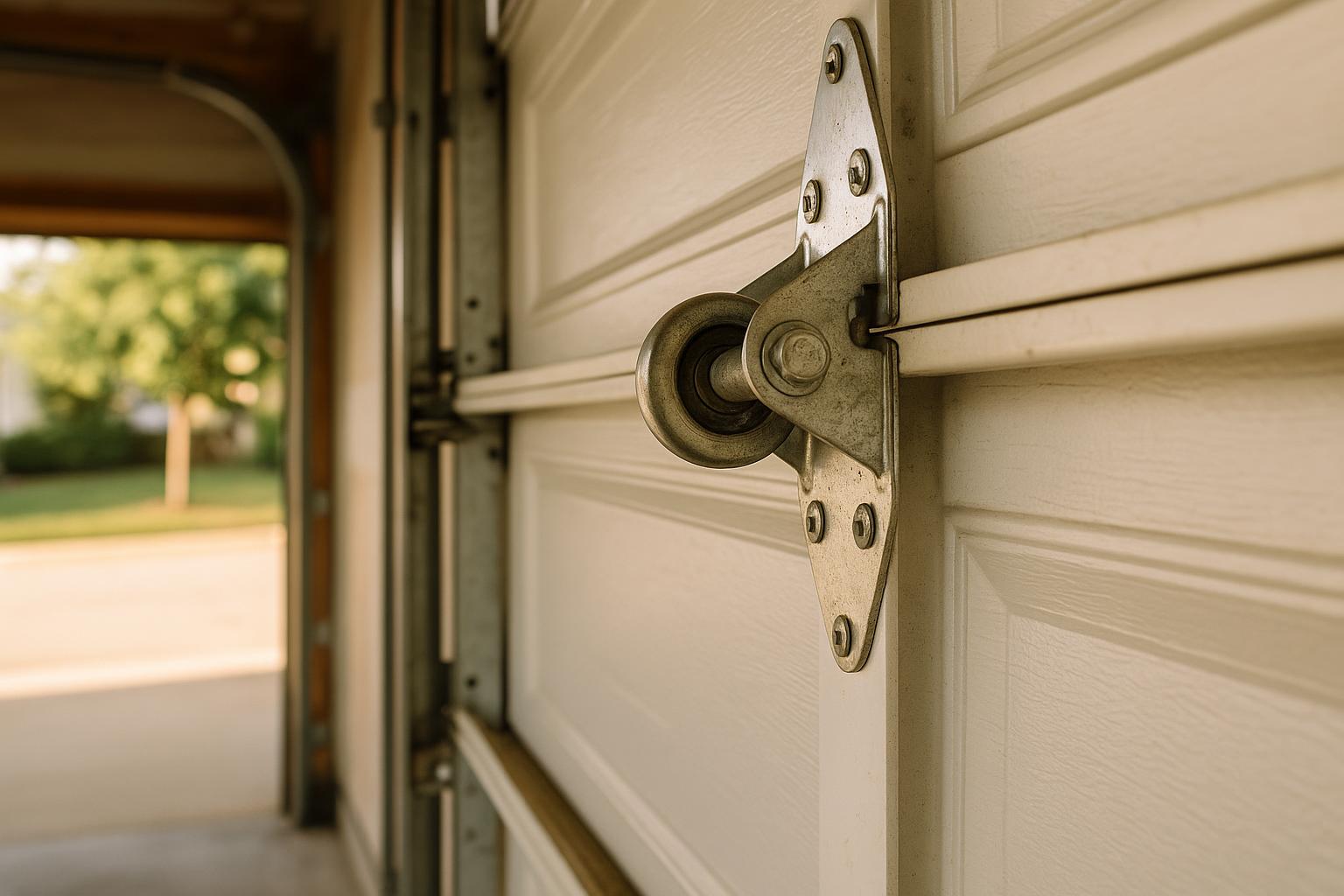
This is the number one cause of a loud garage door, and it's often the easiest to fix. Garage door rollers guide the door along the tracks as it opens and closes. Over time, they wear down, lose lubrication, or develop flat spots — especially if they're the basic steel rollers that come standard on many doors.
What it sounds like: A grinding, squealing, or rattling noise that follows the door as it moves up and down.
The fix: Start by applying a silicone-based garage door lubricant to the rollers. If the noise persists, the rollers likely need to be replaced. Upgrading to nylon rollers is one of the best investments you can make — they're dramatically quieter and last longer than steel ones. This is a repair we do frequently for homeowners throughout Menifee and the surrounding Inland Empire communities, and the difference is night and day.
2. Loose Hardware
Your garage door moves up and down hundreds of times a year. All that vibration gradually loosens nuts, bolts, and brackets throughout the system. When hardware gets loose, metal starts rattling against metal, and the whole door can sound like it's falling apart.
What it sounds like: A vibrating, rattling, or shaking noise, especially when the door changes direction.
The fix: Grab a socket wrench and tighten all the bolts on the door's hinges, brackets, and track supports. Be careful not to overtighten — snug is the goal. Check the opener's mounting bracket too, since a loose connection between the opener and the ceiling can amplify vibrations throughout the garage.
3. Unlubricated Springs and Hinges
Torsion springs, extension springs, and hinges all need periodic lubrication to operate smoothly. In Menifee's climate, where summer temperatures regularly push past 100 degrees and the air is dry, lubricant can evaporate faster than you'd expect. Dry metal-on-metal contact creates noise and accelerates wear.
What it sounds like: A creaking, groaning, or squeaking sound, particularly noticeable when the door first starts moving.
The fix: Apply a garage door-specific lubricant (not WD-40, which is a solvent, not a long-term lubricant) to the springs, hinges, and bearing plates. Do this every six months as part of basic maintenance. If your springs are making a loud popping or snapping sound, that's a different issue entirely — it could mean the spring is close to breaking, and you should call a professional before it fails completely.
4. Bent or Misaligned Tracks
The metal tracks on either side of your garage door need to be properly aligned for the door to travel smoothly. A bump from a car, settling of the garage structure, or simple wear can cause tracks to shift, bend, or develop gaps. When the rollers hit these imperfections, you hear it.
What it sounds like: A scraping, rubbing, or banging noise at specific points during the door's travel.
The fix: Visually inspect the tracks for obvious bends, dents, or gaps. Minor misalignments can sometimes be corrected by loosening the track brackets, gently tapping the track back into position, and retightening. However, if the track is significantly bent or damaged, replacement is the safer option. Forcing a door to run on damaged tracks can cause the door to come off the track entirely — a dangerous situation.
5. An Aging or Failing Opener
If the noise seems to be coming from the ceiling-mounted unit rather than the door itself, your garage door opener may be the problem. Older chain-drive openers are inherently noisy, and as their internal gears wear down, they only get louder. You might also hear straining sounds if the opener is struggling to lift a door that's out of balance.
What it sounds like: A loud mechanical grinding, humming, or chain-slapping noise coming from the opener unit.
The fix: If you have a chain-drive opener, lubricating the chain can help reduce noise. But if the opener is more than 15 years old or the internal gears are worn, it may be time for a replacement. Modern belt-drive openers are significantly quieter and come with features like battery backup and smartphone connectivity. For homeowners in Menifee's newer developments where the master bedroom is often right above the garage, upgrading to a belt-drive opener can be a game changer.
6. Worn Torsion Springs
Torsion springs do the heavy lifting every time your garage door opens. As they age and weaken, they can produce increasingly loud sounds — from creaking and groaning to a sudden, startling bang if they snap.
What it sounds like: Creaking under load, or a single loud bang followed by the door not opening properly.
The fix: Spring replacement is not a DIY job. Torsion springs are under extreme tension and can cause serious injury if handled incorrectly. If you suspect your springs are worn or broken, call a qualified garage door technician. We typically complete spring replacements in under an hour, and we always replace both springs at the same time to keep the door balanced.
When to Call a Professional
Some of these fixes — like lubrication and tightening hardware — are well within the ability of a handy homeowner. But others require specialized tools, replacement parts, and experience to handle safely. Here's a simple rule of thumb:
- DIY-friendly: Lubricating rollers, springs, and hinges. Tightening loose bolts and brackets.
- Call a pro: Replacing rollers, springs, or cables. Adjusting or replacing tracks. Diagnosing opener problems. Anything involving the torsion spring system.
If you've tried the basic maintenance steps and your garage door is still making a racket, there's likely an underlying issue that needs professional attention.
Keep Your Garage Door Quiet With Regular Maintenance
Most noisy garage door problems are preventable with a simple tune-up once or twice a year. A professional maintenance visit includes lubrication, hardware inspection, balance testing, and safety checks — everything needed to keep your door running smoothly and quietly for years to come.
At Menifee Garage Door, we help homeowners across Menifee, Sun City, Murrieta, and the surrounding communities keep their garage doors in top shape. Whether you need a quick tune-up or a full roller and spring replacement, we'll diagnose the problem honestly and give you straightforward pricing before any work begins. If your garage door has been keeping you (or your neighbors) up at night, give us a call — we'll get it sorted out.